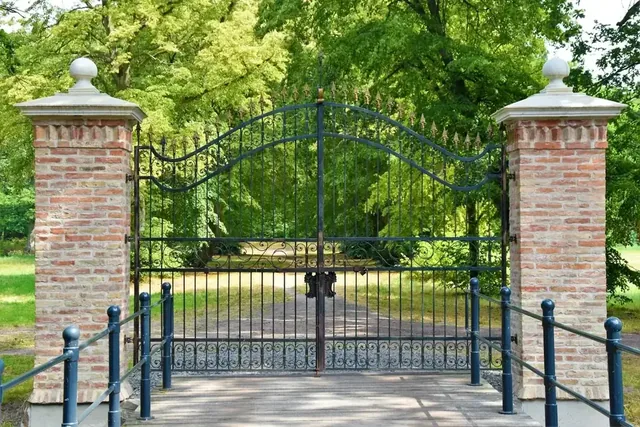
Louisville Custom Iron Gates Company | Wrought Iron Gate Installation in Louisville, KY
Louisville Custom Iron Gates Company designs, fabricates, and installs custom iron gates in the Louisville area. We complete projects for homes and businesses, from ornamental gate installation to custom iron swinging gates and simple gate repairs. Our crews can also make repairs and install automated gates upon your request. Before offering our best gate recommendations, we will need to examine the opening width, driveway grade, available swing/slide clearance, vehicle and pedestrian traffic, access-control needs, and the style of the property.
During your first site visit, we assess your space and help you picture the finished entrance. Before moving to fabrication, we will help you sample and choose designs, finishes, and access options that fit your property. We stand behind our work and will explain your project’s warranty coverage before your project moves forward.
Request a Free Quote
Custom Iron Gate Design, Installation, Automation & Repair in Louisville, KY
Louisville Custom Iron Gates Company designs and installs iron and steel gates around the dimensions and operating requirements of the actual entrance. Gate width, post locations, grade, opening direction, available side clearance, traffic patterns, access controls, and surrounding masonry or fencing can all change what type of gate will work best.
Before installation begins, the gate layout, operating method, hardware, finish, access-control requirements, and other project details should be established so the finished system matches both the opening and the way the entrance will be used.
- Gate layouts planned around the actual opening
- Swing, sliding and pedestrian gate configurations
- Design, installation, automation & repair
- Gate operators, keypads, remotes & intercom access
- Free on-site consultations & quotes
- Serving Louisville, KY
How We Install Gates Across Louisville
Whatever type of gate goes into an opening, the installation itself follows the same sequence: survey and measurement, post setting and footings, hanging the leaf, then adjusting the hardware until the gate closes the same way every time. Most long-term gate faults trace back to that groundwork rather than to the gate.
Our gate installation page walks through what happens on site, how deep posts need to be set and why, what gets checked before we leave, and what affects the timeline. It is worth reading before choosing a gate type.
What Types of Custom Iron Gates Do We Install in Louisville, KY?
The right gate configuration depends on where the gate is installed and what must pass through it. A driveway entrance has different structural, clearance and automation requirements than a pedestrian walkway, pool barrier, courtyard or narrow side-yard opening.
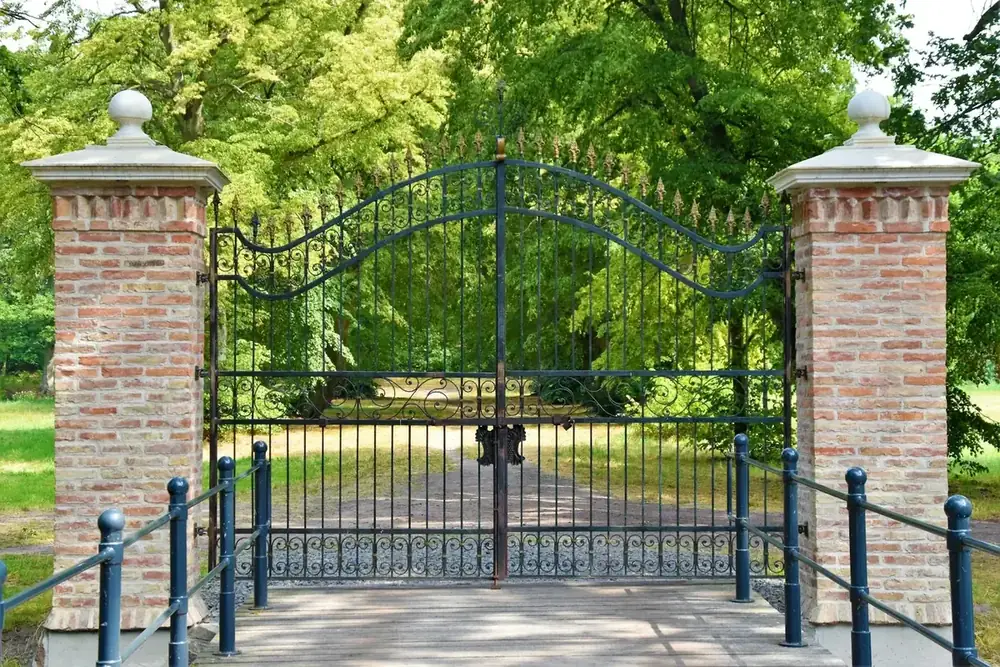
Custom Driveway Gates
Driveway gate design starts with the opening width, driveway grade and the space available for the gate to move. A swing gate needs a clear opening arc, while a sliding gate needs sufficient runback beside the driveway. Once the operating geometry works, the gate's height, proportions, infill and ornamental details can be matched to the property.
Learn more →
Estate Gates
Estate entrances mean long leaves on 6"×6" posts set in deep footings, where hinge load and wind across the gate matter more than picket pattern does. Dual-swing layouts and masonry pier tie-ins are the norm rather than the exception.
Learn more →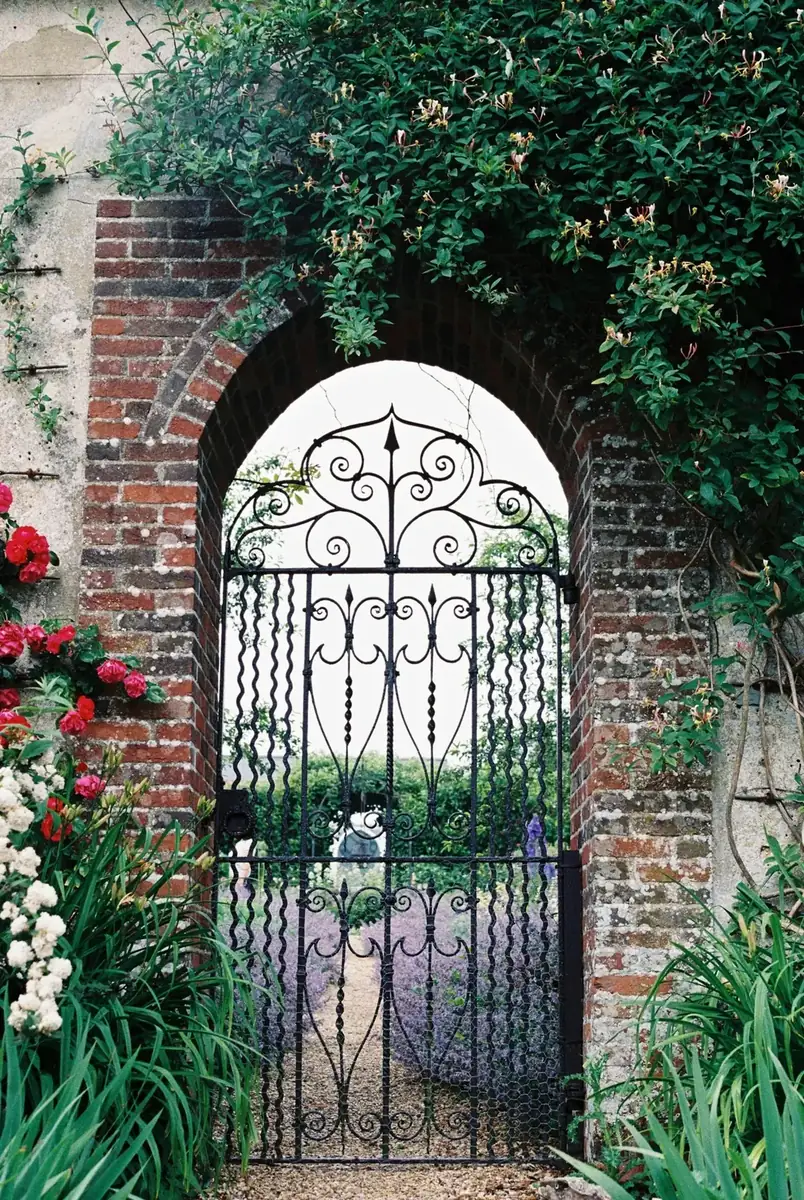
Ornamental Gates
Ornamental gate design can incorporate scrollwork, finials, rings, pickets, geometric patterns and decorative infill without changing the gate's basic structural requirements. The amount of ornamentation should be considered alongside gate weight, visibility, surrounding architecture and whether the entrance needs to provide privacy or remain visually open.
Learn more →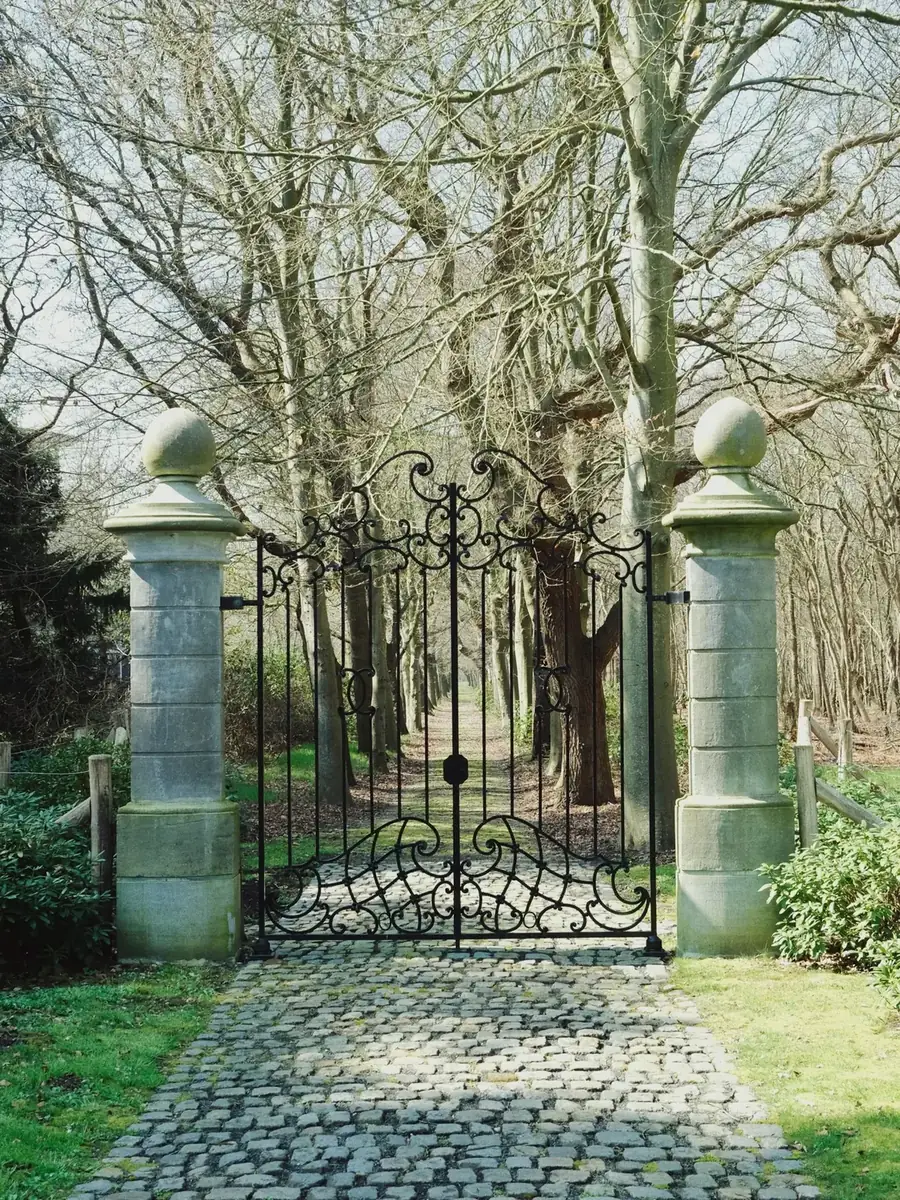
Walkway & Pedestrian Gates
Pedestrian gates should be sized for comfortable daily passage while keeping the latch, hinges and gate frame aligned through repeated use. Opening direction, walkway width, latch height, closing hardware and the connection to adjoining masonry or fencing all affect how well a pedestrian gate works.
Learn more →
Garden Gates
A short span lets a garden gate take shapes a driveway gate cannot: a true arched top, a curved bottom rail following a path, an asymmetric pattern. The practical considerations are damp ground at the post and a latch that whatever lives in the garden cannot open.
Learn more →
Pool Gates
On a pool gate the hardware is the safety system. Self-closing hinges and a self-latching mechanism have to bring the leaf home and engage every time, and latch height and gap spacing are set by the barrier requirements that apply to the property rather than by preference.
Learn more →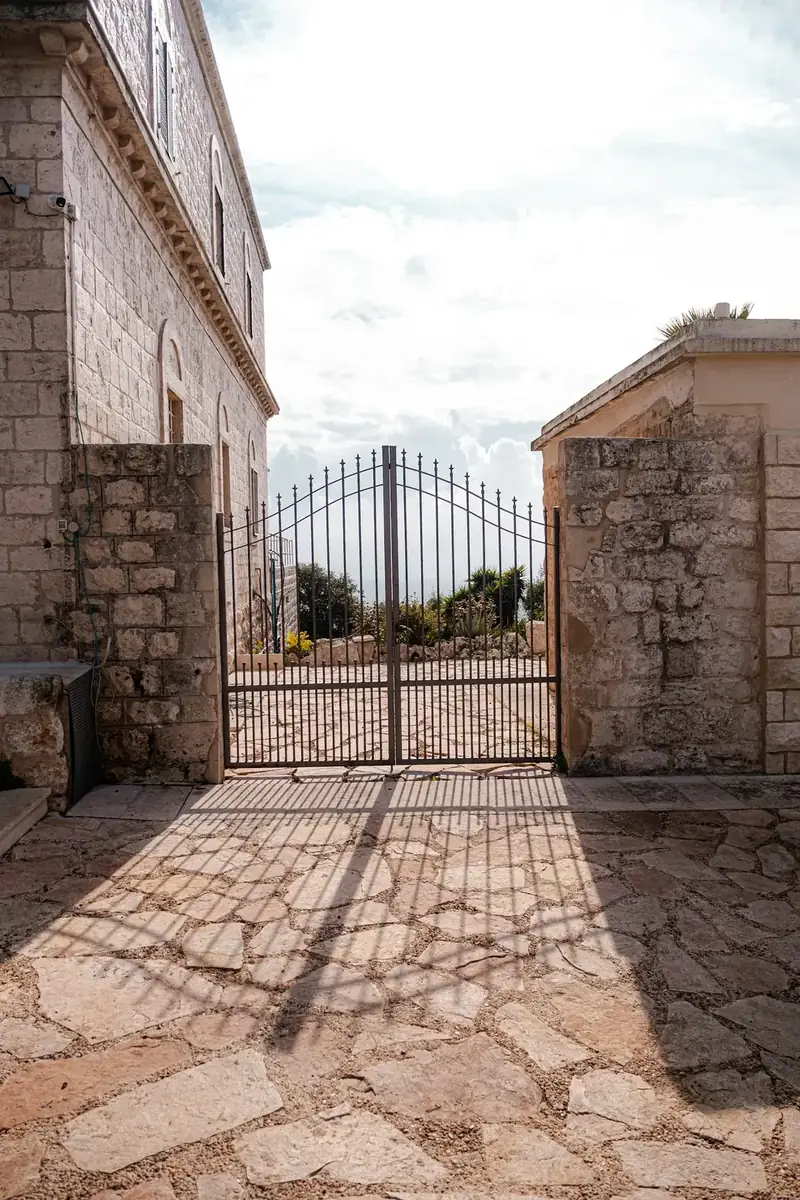
Courtyard Gates
Courtyard gates are usually viewed at pedestrian distance, so proportions, latch hardware, hinge placement and the appearance of both faces of the gate matter more than they might on a gate viewed primarily from the street. The gate also has to work with nearby walls, columns, paving and landscaping without creating an awkward opening path.
Learn more →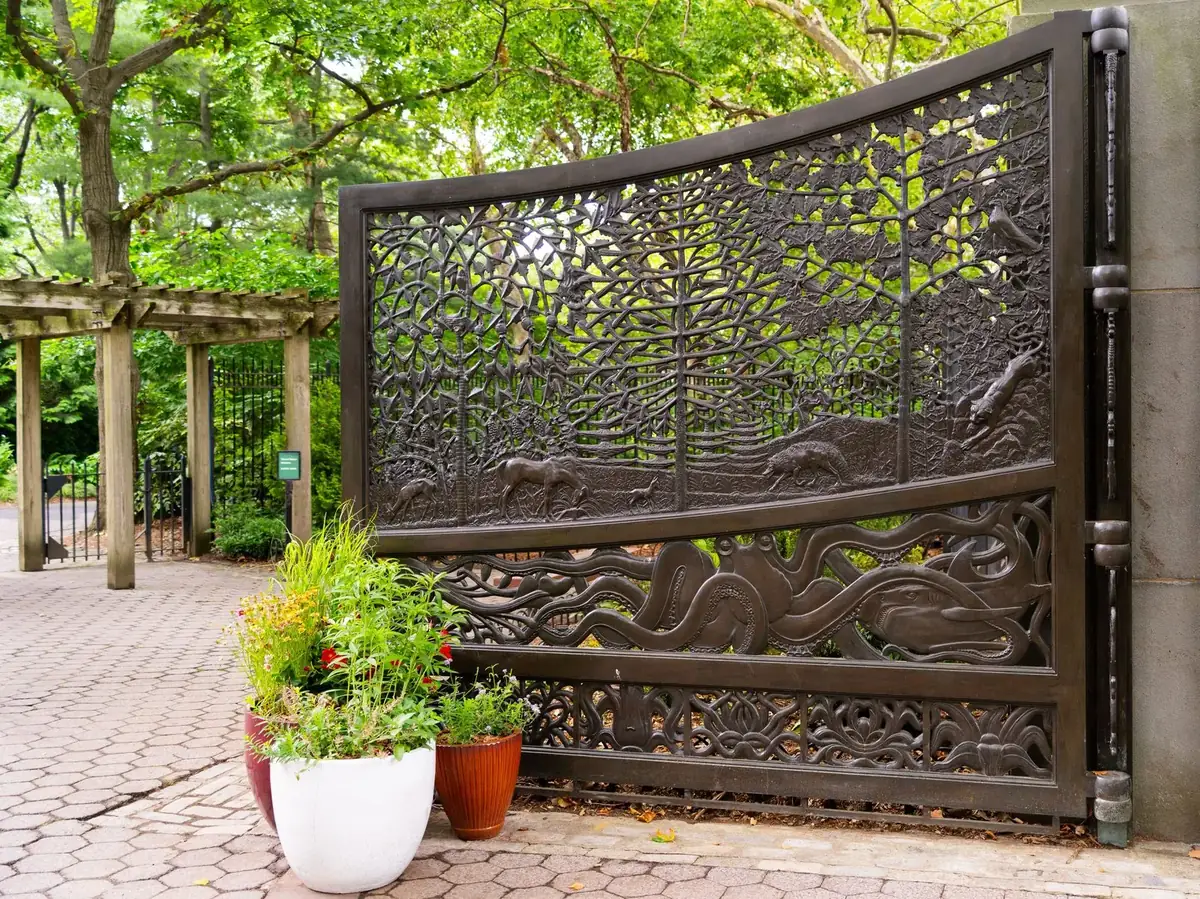
Side Yard Gates
Side-yard gate width should account for what actually needs to pass through the opening, whether that is normal foot traffic, trash containers, lawn equipment or a mower. Narrow setbacks can also limit hinge placement and opening direction, so the usable passage width matters more than the nominal distance between the house and property boundary.
Learn more →
Entry Gates
Residential entry gates usually serve a pedestrian opening rather than a vehicle entrance, so their proportions should relate to the walkway, porch, front elevation and adjoining fence or masonry. The gate still needs enough clear width for normal passage while leaving room for hinges, latch hardware and a comfortable opening path.
Learn more →What Automatic Gate Services Do We Offer in Louisville, KY?
Automatic gate systems combine the gate itself with an operator, power source, controls and required safety equipment. Operator type and capacity depend on factors such as gate configuration, gate weight, opening width, expected daily cycles and how residents, employees, visitors or deliveries need to enter the property.

Automatic Driveway Gate Installation
Automatic driveway gate operators must be matched to the gate's movement type, size, weight and expected duty cycle. A residential gate used a few times each day places different demands on an operator than a shared or commercial entrance that may cycle repeatedly throughout the day.
Learn more →
Sliding Gate Installation
Sliding driveway gates generally use either a ground-track or cantilever configuration. Track systems support the gate on wheels traveling along the opening, while cantilever gates suspend the moving gate across the driveway without a track through the vehicle path. Both require sufficient lateral runback space beside the entrance.
Learn more →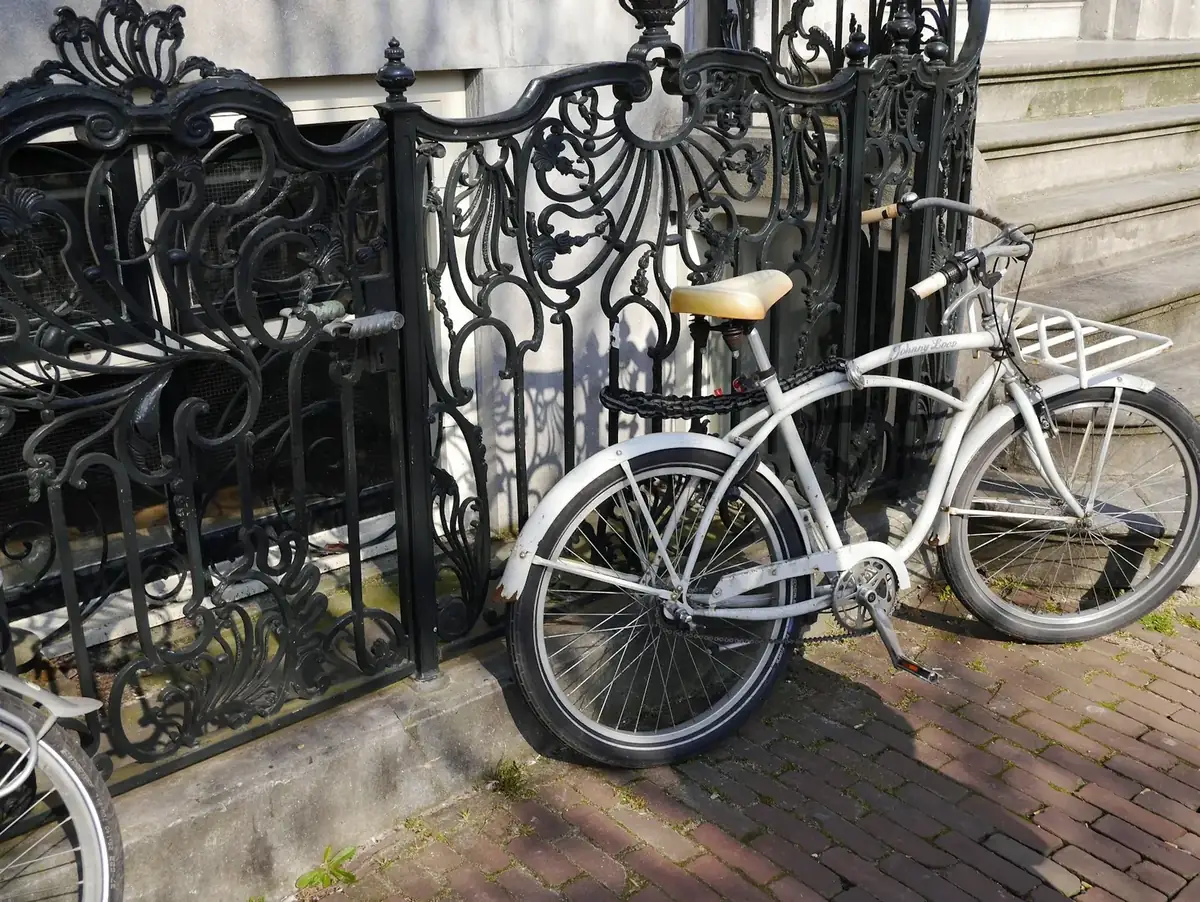
Swing Gate Installation
Swing gates may use a single leaf or a pair of leaves, but either configuration needs enough unobstructed space through the opening arc. Driveway grade is especially important because a gate swinging toward rising pavement can lose ground clearance as it opens.
Learn more →
Solar Gate Opener Installation
A solar gate operator uses photovoltaic charging and battery storage instead of relying entirely on utility power at the entrance. System suitability depends on operator demand, expected gate cycles, battery capacity, solar exposure and the electrical load from accessories such as keypads or communication equipment.
Learn more →
Gate Access Control & Keypad Installation
Gate access control can be configured around residents, employees, visitors, contractors and deliveries. Depending on the system, entry may be controlled through PIN codes, remotes, credentials or other devices, with the access-control equipment sending an open command to the gate operator.
Learn more →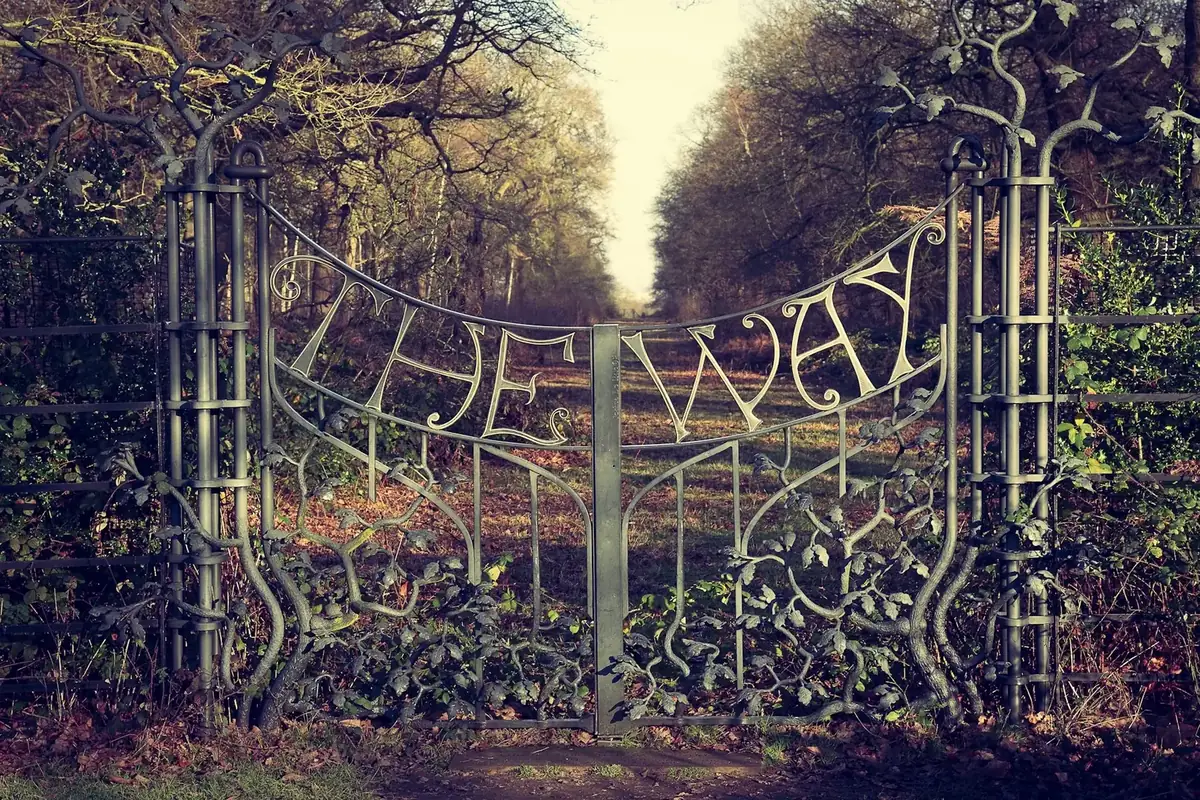
Remote Control Gate Installation
A gate remote communicates with a receiver connected to the operator, so compatibility between the transmitter, receiver and gate-control equipment matters. Effective range can also be affected by the receiver location, surrounding structures and radio interference.
Learn more →
Gate Intercom Installation
A gate intercom lets someone at the property communicate with a visitor before granting access. Systems may use audio or video communication and can be integrated with the gate controls so authorized users can trigger the gate without giving the visitor a permanent code or remote.
Learn more →Swing Gate vs. Sliding Gate: What Determines the Better Fit?
Whether a driveway gate should swing or slide depends mainly on driveway grade, opening width and the clearance available around the entrance. A swing gate needs unobstructed room through its opening arc. If the driveway rises sharply behind the gate, the bottom of an inward-swinging gate can lose clearance as it opens.
A sliding gate avoids the swing arc but creates a different space requirement. The gate needs enough runback beside the driveway to move completely clear of the opening. Cantilever systems require even more side room because the gate includes a counterbalance section beyond the clear opening.
The correct layout therefore starts with the property, not with a preference for one operator type. Measuring the grade, opening and available side clearance first can rule out configurations that would otherwise look suitable on paper.
What Gate Repair & Maintenance Services Do We Offer in Louisville, KY?
Gate problems can originate in the frame, posts, hinges, latch, operator, controls, power supply or alignment of the entire system. Repair should begin by identifying which component is actually causing the symptom rather than assuming that a gate that will not open or close automatically has a failed motor.

Gate Repair
A gate that drags, sags, binds or will not latch may have a hinge problem, but similar symptoms can also come from a leaning post, distorted frame or changing alignment across the opening. Identifying the source of the misalignment matters because replacing hardware alone will not correct a structural problem elsewhere in the gate.
Learn more →
Gate Motor Repair
An automatic gate that stops moving does not automatically need a new motor. Power loss, batteries, control boards, safety devices, limit settings, receivers and mechanical resistance at the gate can all create symptoms that appear to be operator failure.
Learn more →
Gate Hinge & Hardware Repair
A sagging swing gate should be inspected beyond the hinge itself. Worn hinge components can cause movement, but a loose or leaning post, damaged weld, distorted frame or excessive gate load can produce the same visible symptom.
Learn more →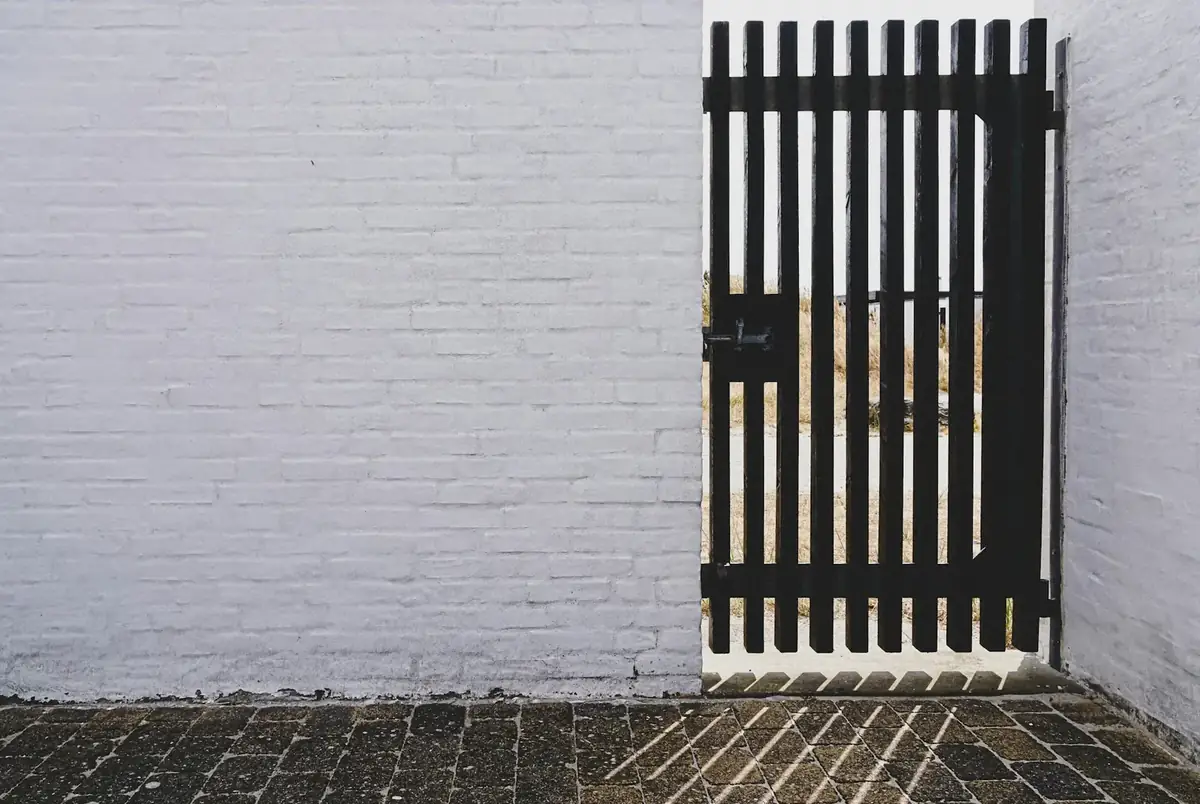
Gate Welding Repair
Welding can repair cracked joints, separated connections and some damaged steel components, but welding alone does not correct every gate problem. A frame that has twisted or gone out of square may need to be realigned before damaged joints are repaired so the gate does not remain structurally sound but geometrically misaligned.
Learn more →
Gate Rust Removal & Refinishing
Surface corrosion and structural corrosion should not be treated as the same problem. Rust confined to the surface may be addressed through preparation and refinishing, while section loss, perforation or corrosion around a structural connection can require metal repair before a new finish is applied.
Learn more →
Gate Painting & Powder Coating
Powder coating and liquid paint differ in application, repairability and the preparation required before finishing. Powder coating is applied electrostatically and cured with heat, while liquid coatings can be more practical for field repairs and matching an existing painted surface. In either case, corrosion removal and surface preparation strongly affect the durability of the finished coating.
Learn more →Why a Gate Can Sag Even When the Hinges Look Fine
A sagging gate is an alignment problem, not necessarily a hinge problem. The visible drop at the latch side can originate at the hinge, but it can also result from a post moving out of plumb, a weld cracking, the frame distorting or the gate carrying more load than the support system can maintain.
The location of the movement helps narrow down the cause. Play concentrated at the hinge points suggests a different repair than a solid hinge attached to a leaning post. A gate frame that is no longer square creates another problem entirely.
That is why replacing hinges without checking the post and frame can leave the original sagging problem unresolved.
What Should Be Measured Before Choosing a Driveway Gate?
Before deciding on a driveway gate style, measure more than the distance between two posts. The usable opening width, driveway slope, space beside the entrance, clear swing area, vehicle approach and location of existing walls, fencing or columns can all affect the design.
For a swing gate, the driveway must provide enough clearance through the entire opening arc. For a sliding gate, there must be sufficient runback beside the driveway for the gate to move out of the opening. Automatic systems also need space for the operator and safety equipment, along with an appropriate power plan.
These site conditions can eliminate otherwise attractive gate configurations before materials or decorative details are selected.
Where We Work Across Louisville and the Surrounding Area
We cover Louisville Metro and the neighbouring communities in Jefferson and Oldham counties. The pages below go into what tends to shape gate design in each area, whether that is a narrow Victorian lot, a long wooded approach or a subdivision with architectural guidelines.
- Custom wrought iron gates in Anchorage
- Custom wrought iron gates in Audubon Park
- Custom wrought iron gates in Clifton
- Custom wrought iron gates in Crestwood
- Custom wrought iron gates in Fern Creek
- Custom wrought iron gates in The Highlands
- Custom wrought iron gates in Iroquois Park
- Custom wrought iron gates in Lyndon
- Custom wrought iron gates in Middletown
- Custom wrought iron gates in Newburg
- Custom wrought iron gates in Old Louisville
- Custom wrought iron gates in Pewee Valley
- Custom wrought iron gates in Pleasure Ridge Park
- Custom wrought iron gates in Prospect
- Custom wrought iron gates in Shively
- Custom wrought iron gates in Springhurst
- Custom wrought iron gates in St. Matthews
- Custom wrought iron gates in Valley Station
If your address is not listed, it does not mean we do not cover it. Give us a call and we will tell you straight away.
Frequently Asked Questions
How much does a custom iron gate cost in Louisville?
Custom gate cost depends on the opening width, gate size, material, design complexity, finish, hardware and whether the entrance is manual or automated. Automatic systems can add operator, power, safety-device and access-control requirements, so two gates covering the same opening can have very different project scopes.
How long does gate installation take?
Gate-project timelines vary with design complexity, site preparation, material and hardware requirements, finish, automation and whether electrical or access-control work is involved. A manual pedestrian gate and an automated driveway entrance therefore should not be expected to follow the same project sequence.
Do I need a permit for a driveway gate in Louisville?
Permit, setback and approval requirements depend on the property's jurisdiction and the location of the proposed gate. Entrances near a public right-of-way, pool barriers, commercial access points and properties subject to neighborhood or association rules may require additional review, so applicable requirements should be checked for the specific address before installation.
Will an HOA approve a custom iron gate?
HOA and neighborhood design requirements vary by community. Before ordering a visible driveway or entry gate, property owners should check any applicable restrictions on gate height, placement, materials, finish, setbacks or architectural appearance.
How long will a wrought iron gate actually last?
The service life of an iron or steel gate depends heavily on corrosion protection, drainage, coating condition, hinge and post alignment, traffic, physical damage and maintenance. Catching coating failure or alignment problems early can prevent relatively small issues from developing into structural repairs.
Does financing exist for a custom gate project?
We can discuss payment structure during your quote. Reach out and we will walk through the options available for your project.
Can you automate an existing manual gate instead of building new?
In many cases yes, as long as the existing gate and posts are structurally sound enough to carry an opener. We will assess this on site before recommending automation over replacement.
Ready to Talk Through Your Gate Project?
Tell us about your gate project using the form below, or call our team to discuss your entrance.